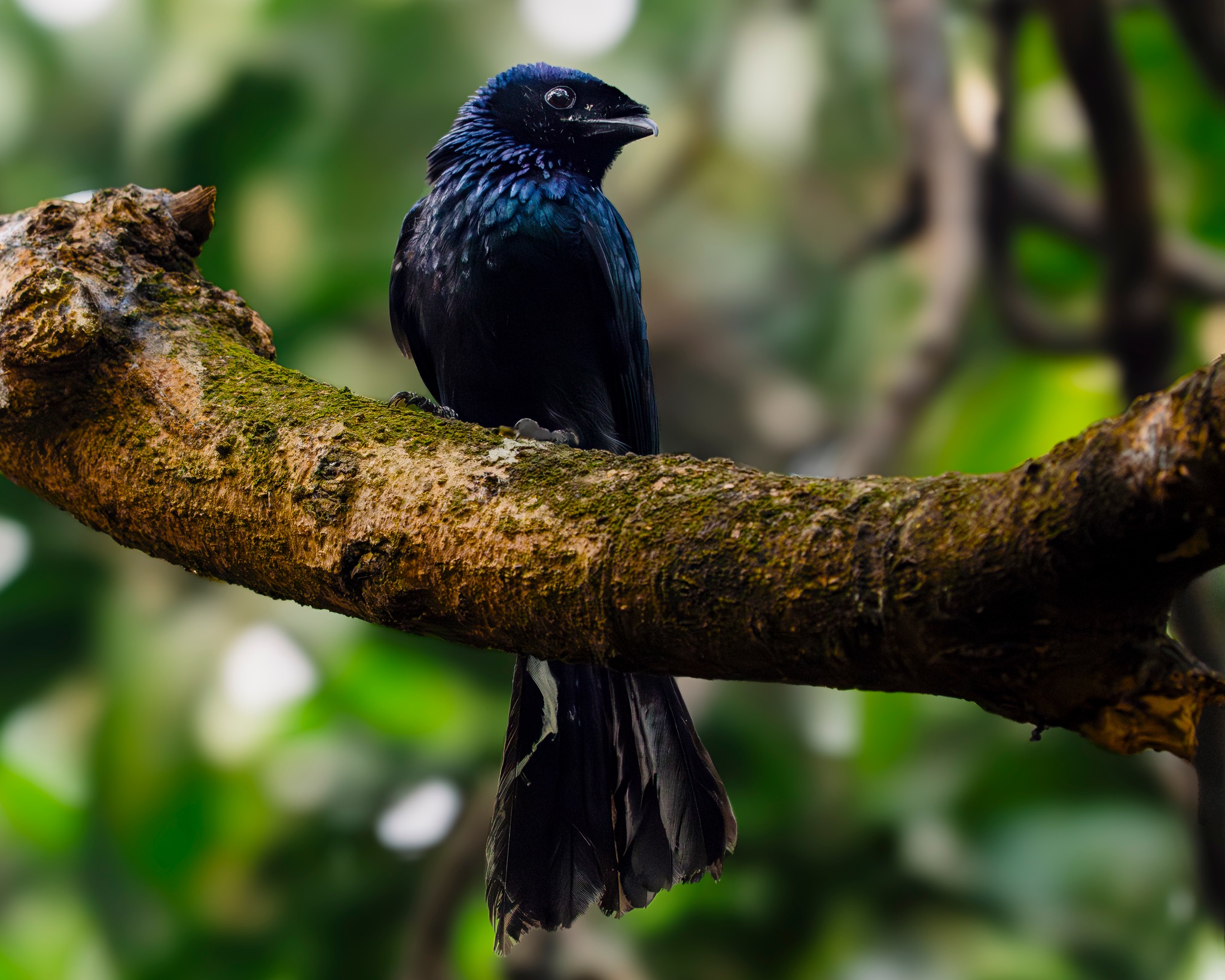
Drongos belong to the family Dicruridae and are found across the entire Indian Subcontinent. Whether it’s a mountain or desert, island or jungle, they are practically omnipresent; you can find at least one species in almost any habitat.
I didn’t start with a specific target of photographing all 9 species of drongos found in India, but along my bird-watching journey, it came together nicely. One might say drongos are “easy” birds to get, but sometimes the easy ones become the toughest to find. If I had to rank the Indian drongo species by difficulty—from hardest to easiest—my list would look like this:
- Crow-billed Drongo
- Andaman Drongo
- Lesser Racket-tailed Drongo
- Hair-crested (Spangled) Drongo
- White-bellied Drongo
- Ashy Drongo
- Greater Racket-tailed Drongo
- Bronzed Drongo
- Black Drongo
Getting the Crow-billed Drongo is notoriously tough, and for the Andaman Drongo, you obviously need to cross the ocean to the Andaman Islands. The others are relatively easy to find across the country. Let’s begin the journey…
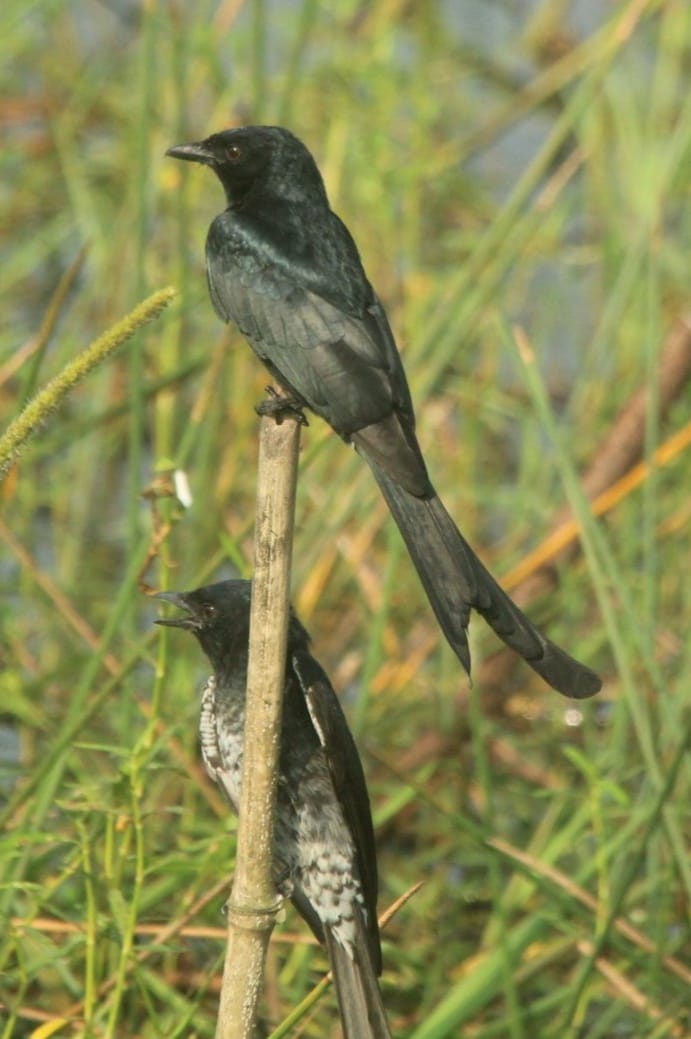
Black Drongo (Dicrurus macrocercus) - The Protector
This is the most common drongo one can find across the Indian Subcontinent. It is fiercely territorial and acts as a “protector,” for which in Marathi it is called कोतवाल or Kotoyal means someone who protects. showing absolutely no fear of mobbing birds much larger than itself, including crows and raptors. I photographed my first one at a nearby patch in July 2022.
Though this insectivorous bird helps farmers by eating pests from the fields, they have a mischievous side. They exhibit kleptoparasitism—stealing food from other birds by relentlessly chasing them. They are highly adaptable, often using man-made structures like wires and poles as hunting perches, and will opportunistically hunt fleeing insects when farmers set fire to crop stubble. There are a couple of subspecies found in India (such as macrocercus in the peninsula and albirictus in the north), and fortunately, I have photographed two of them.
Bronzed Drongo (Dicrurus aeneus) - Shiny as Bronze
This is a special bird to me. It makes loud, frequent calls at the end of the year, which I used to hear behind my house before I even knew what bird was making them! When I finally saw it, I noticed it is considerably smaller than the Black Drongo, boasting a highly metallic, glossy blue-bronze back—a beautiful sight indeed.
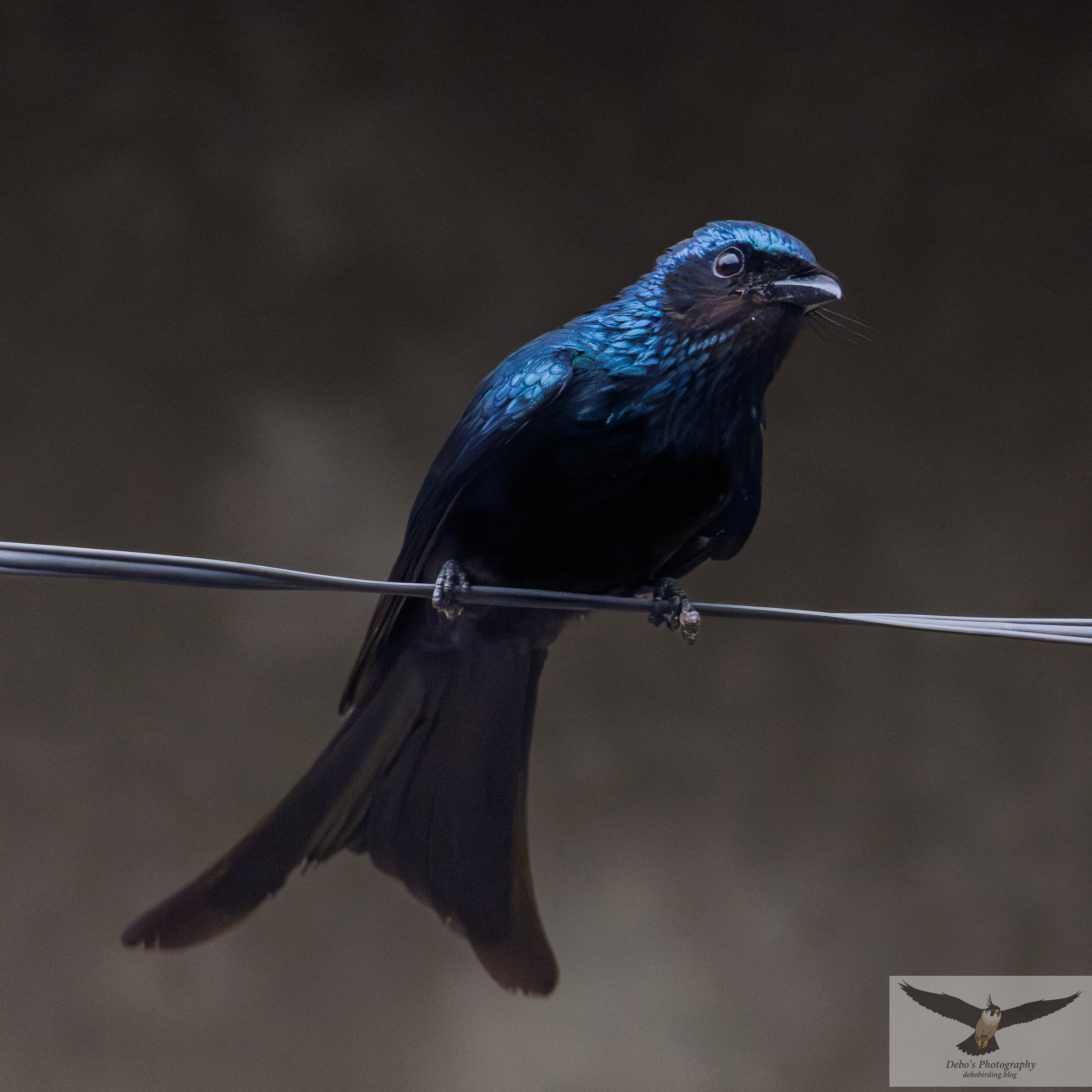
Since then, I have encountered this forest-loving bird in multiple places. It is an incredible vocal mimic, easily replicating the calls of other birds in its habitat. Though I now have multiple photos of this species, it remains a fantastic bird to observe.
Greater Racket-tailed Drongo (Dicrurus paradiseus) - Truly Great
This spectacular species inhabits wildly different habitats, from the Himalayan foothills to the evergreen Western Ghats, and all the way to the remote Andaman Islands. This adaptability exhibits its incredible survival potential. In Bengali, it is called Vimraj (ভীমরাজ). This is likely due to its larger size, signifying Bhima (ভীম), the strongest of the Pandavas from the Mahabharata.
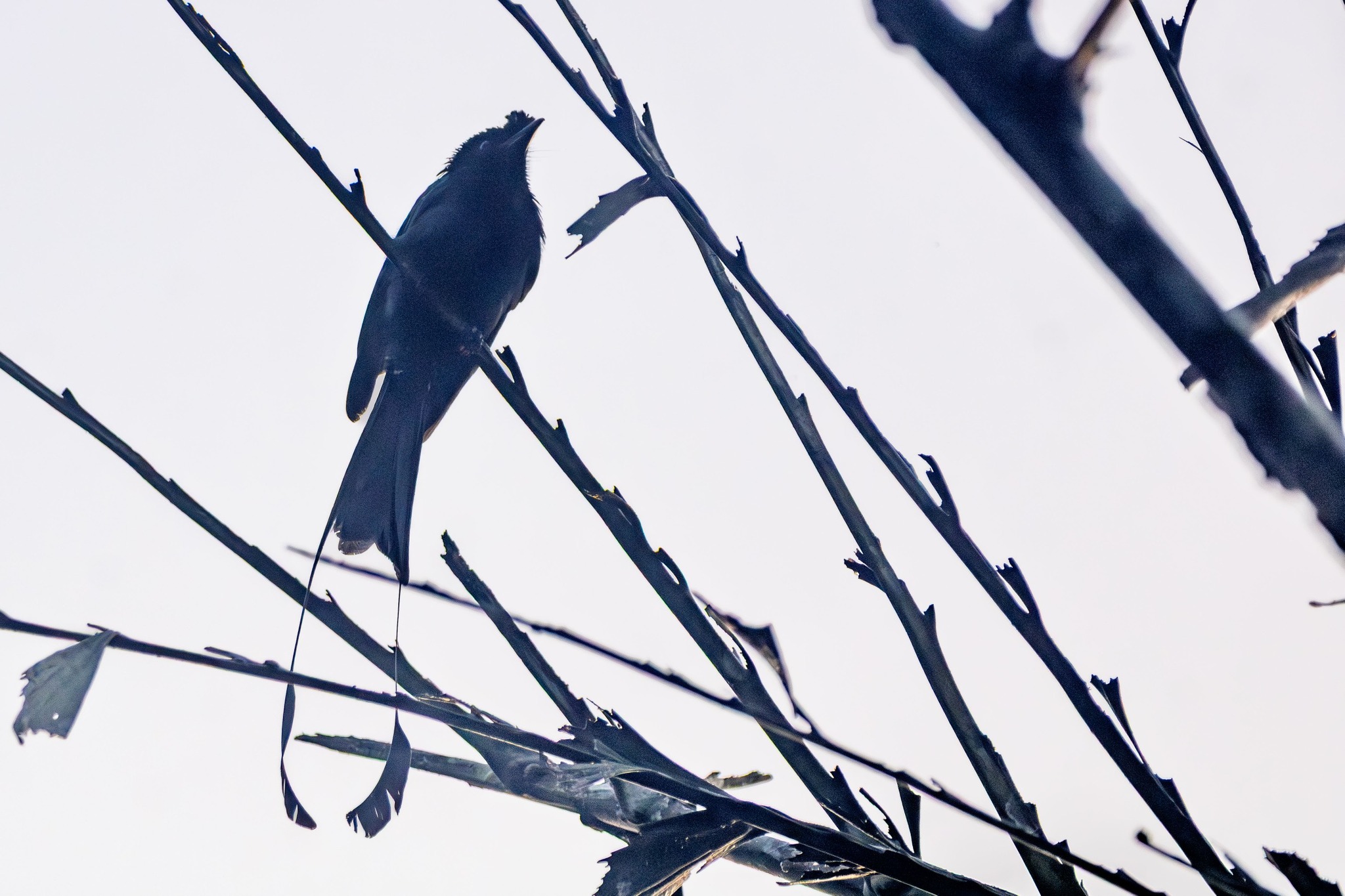
I first saw this bird in Kerala during my first dedicated birding tour in November 2023. They are incredibly loud and are often the “ringleaders” of mixed-species foraging flocks. Below is a breakdown of the subspecies found across the subcontinent:
- D. p. paradiseus – Southern peninsular India (the nominate subspecies)
- D. p. grandis – Southern foothills of the Himalayas from North India East to extreme North Assam
- D. p. rangoonensis – Central India
- D. p. otiosus – Andaman Islands
- D. p. nicobariensis – Nicobar Islands
I have also seen the otiosus subspecies in the Andaman Islands. Interestingly, it completely lacks the prominent forehead crest found on mainland birds, making it look a bit like a Lesser Racket-tailed Drongo at first glance!
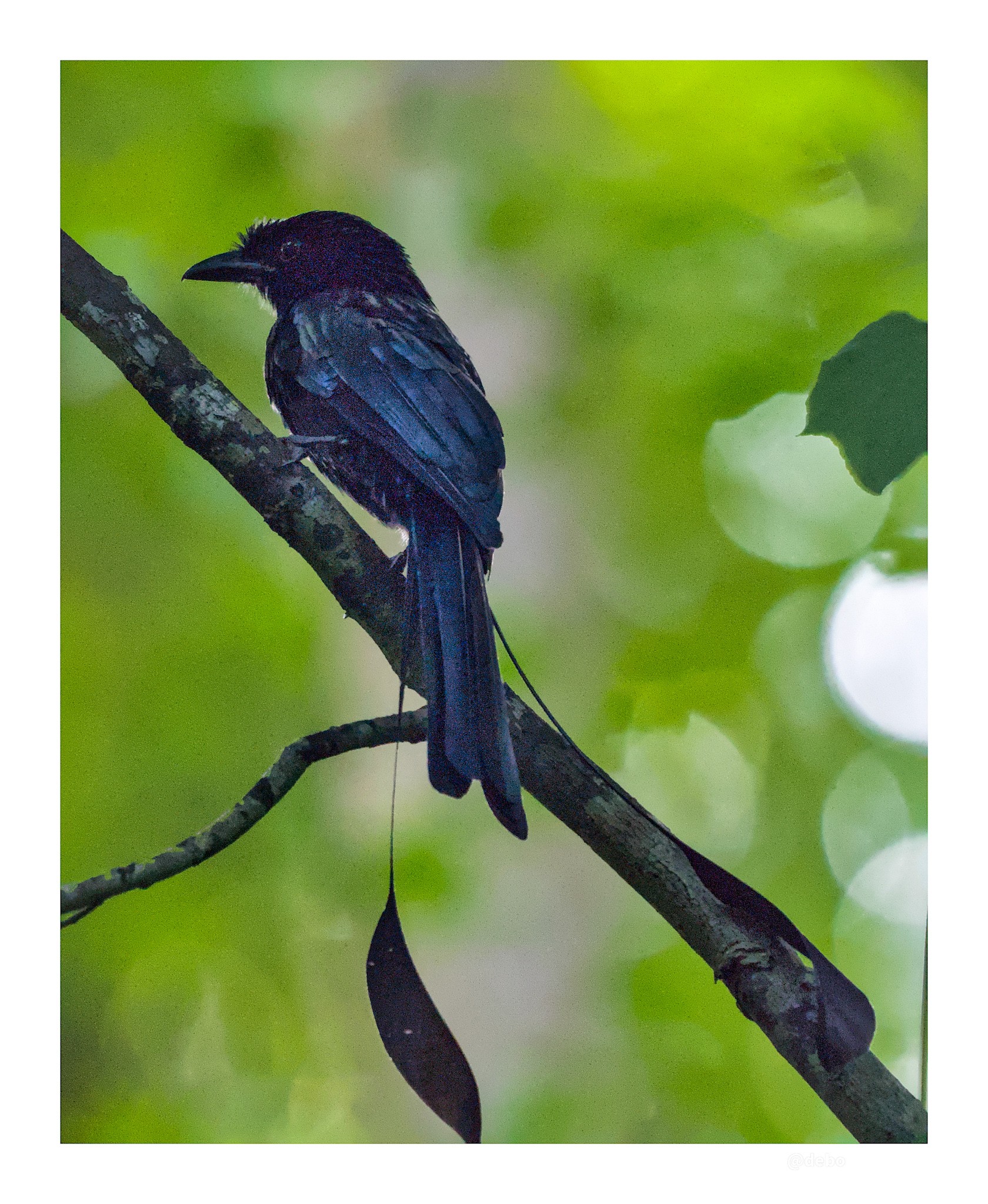
Ashy Drongo (Dicrurus leucophaeus) - The Altitudinal Migrant
I first heard about this species from a friend who mentioned it could be found nearby. I was given a crucial ID pointer: look for the crimson-red eye, which easily separates it from the similar-looking Black Drongo.
Based on that, I initially got two photos, though they remained a doubtful record. My first confirmed sighting happened in Latpanchar, a beautiful village in the Darjeeling district. I later identified the subspecies as hopwoodi, which is distinctly more ashy-grey compared to its darker, blackish counterparts. Many populations of Ashy Drongos are altitudinal migrants, moving down from the Himalayas during the harsh winters.
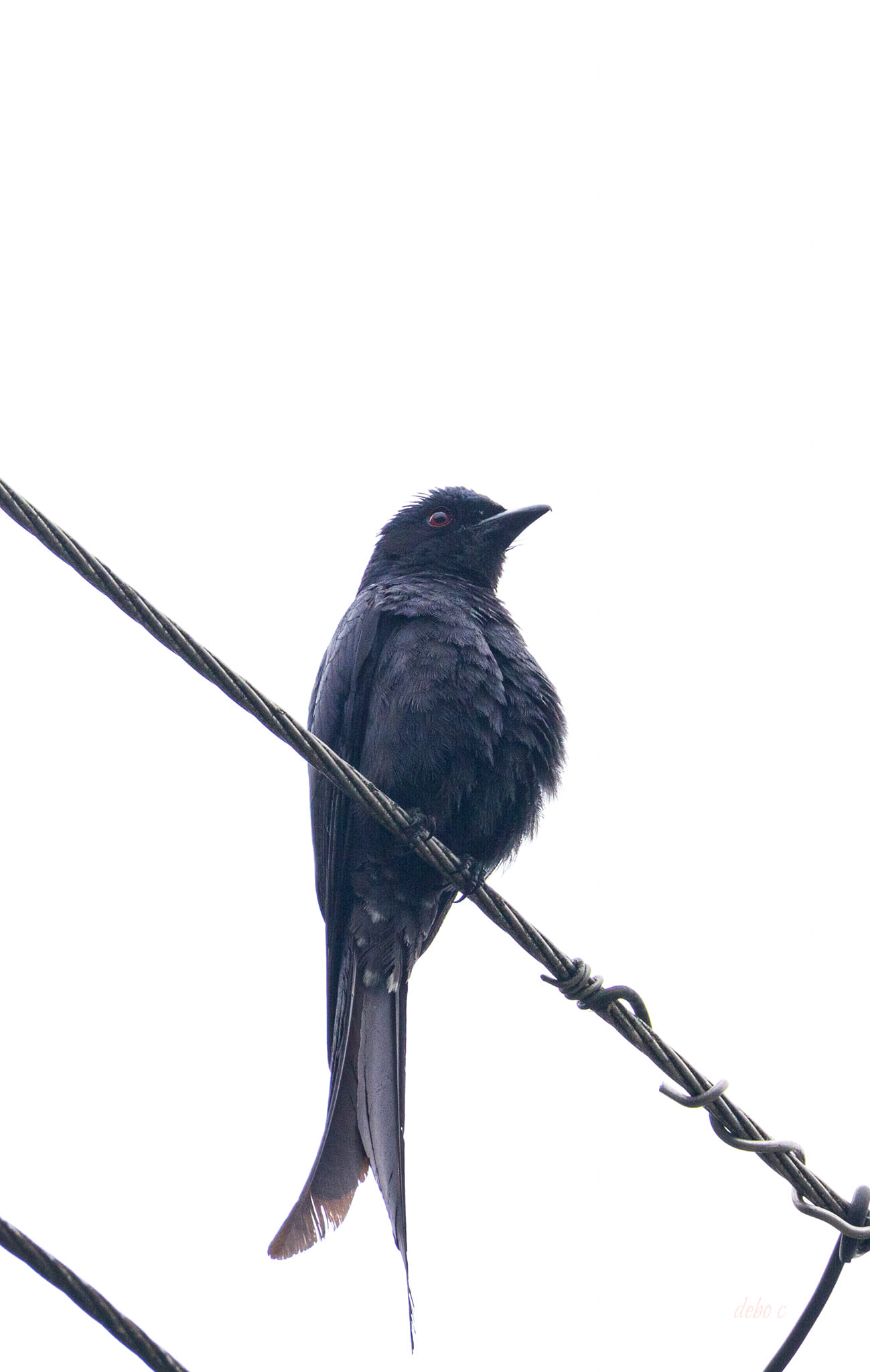
White-bellied Drongo (Dicrurus caerulescens) - An Endemic Beauty
I would call this an unusual drongo. Because the Dicruridae family is entirely known for deep, glossy blue and black plumage, seeing one with a stark white belly is an unfamiliar and striking sight. It is endemic to the Indian Subcontinent (India and Sri Lanka) and is split into two main visual groups: white-bellied and white-vented.
Fortunately, I spotted it in our neighboring state of Odisha at Panchalingeswar during a casual walk in March 2023. Though I managed a somewhat better shot on my second visit, I am still waiting for the perfect opportunity to photograph it in all its glory.
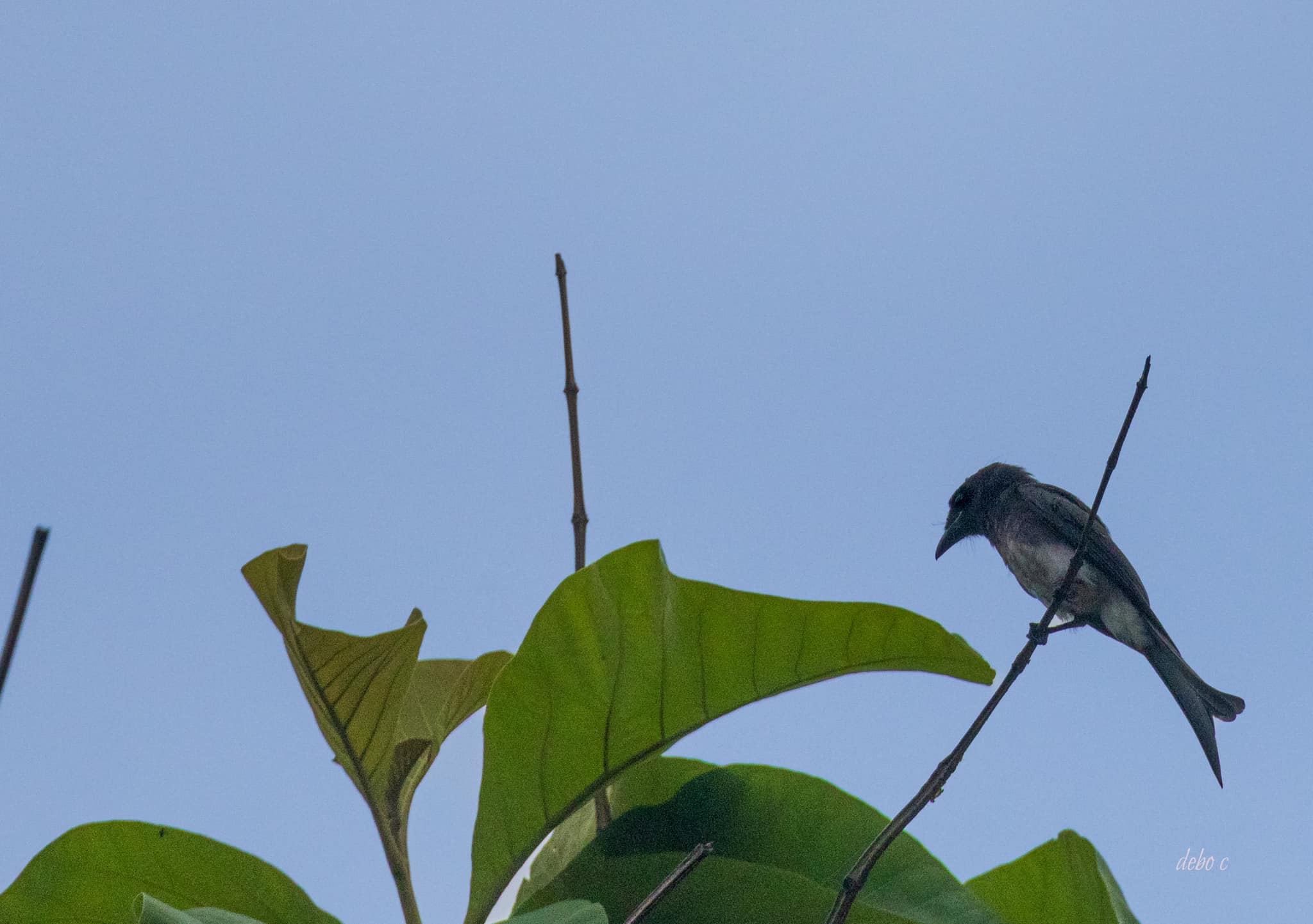
Hair-crested Drongo (Dicrurus hottentottus) - The Nectar Lover
(Note: A recent taxonomic split classified the Australasian populations as the Spangled Drongo (D. bracteatus), making our Asian birds the Hair-crested Drongo!)
These guys are local winter visitors to my area from the Himalayas, and I first got to see them on an awesome day in December 2022. I’ve seen them in various places since, but my best photo so far was taken last September at Rongtong. Unlike most drongos that strictly hunt insects, Hair-crested Drongos have a specialized, slightly decurved bill and an incredible fondness for nectar, often seen foraging in flowering trees like the Silk Cotton.
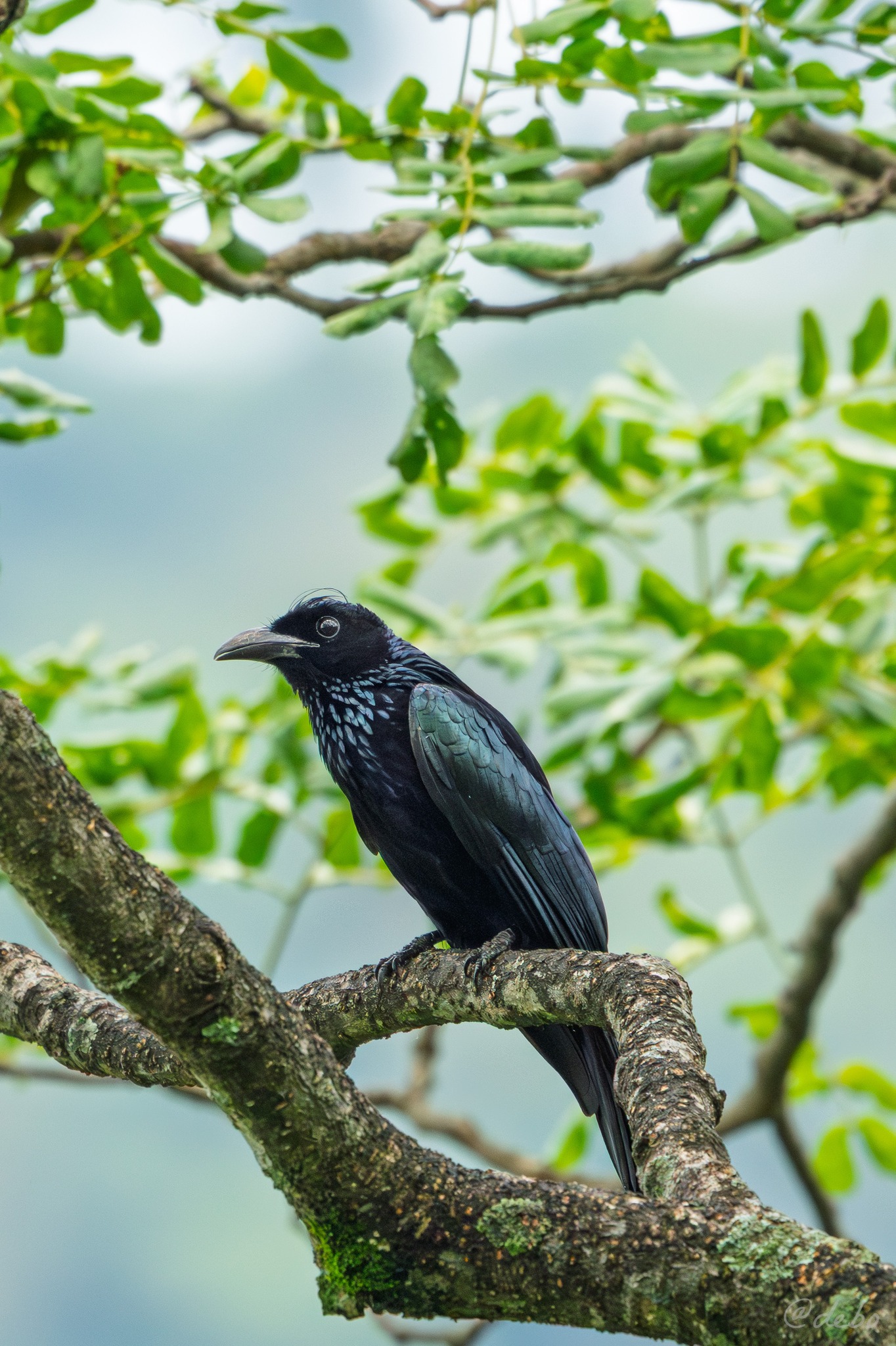
Lesser Racket-tailed Drongo (Dicrurus remifer)
This is the smaller cousin of the Greater Racket-tailed Drongo, distinguished by its square-cut tail (above the rackets) rather than a forked one. I wanted to see this bird for a long time and finally got the chance this year while visiting Rongtong in December 2025, though I didn’t manage a photograph then.
I finally got my photos at Rabindra Sarobar, which is an unbelievable urban hotspot for seeing uncommon birds. Photographing this bird completed my quest to capture all the Drongo species in India, yielding an unforgettable birding experience.

Crow-billed Drongo (Dicrurus annectens) - The Elusive Migrant
If you ask me, this is the toughest drongo to find. Yet, I got it at Rabindra Sarobar in October 2024 quite easily, which saved me a lot of time!
This species is a passage migrant, meaning it only stops over for a few days during its long migration, making sightings heavily reliant on being in the right place at exactly the right time. Literature often describes this bird as shy, but my observation was quite different. Perhaps because it was exhausted from passage migration, the bird was surprisingly bold and allowed me to get some great photos.
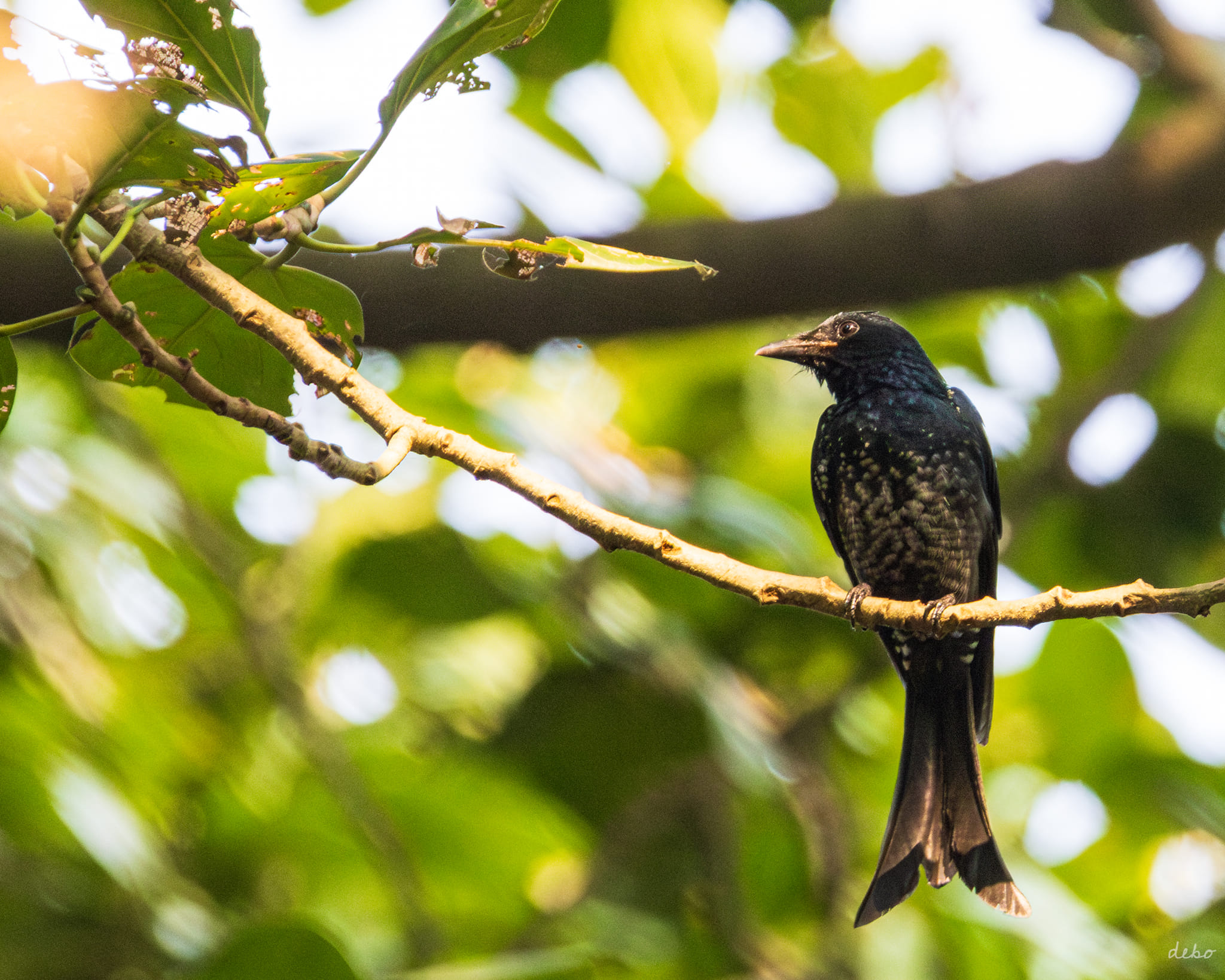
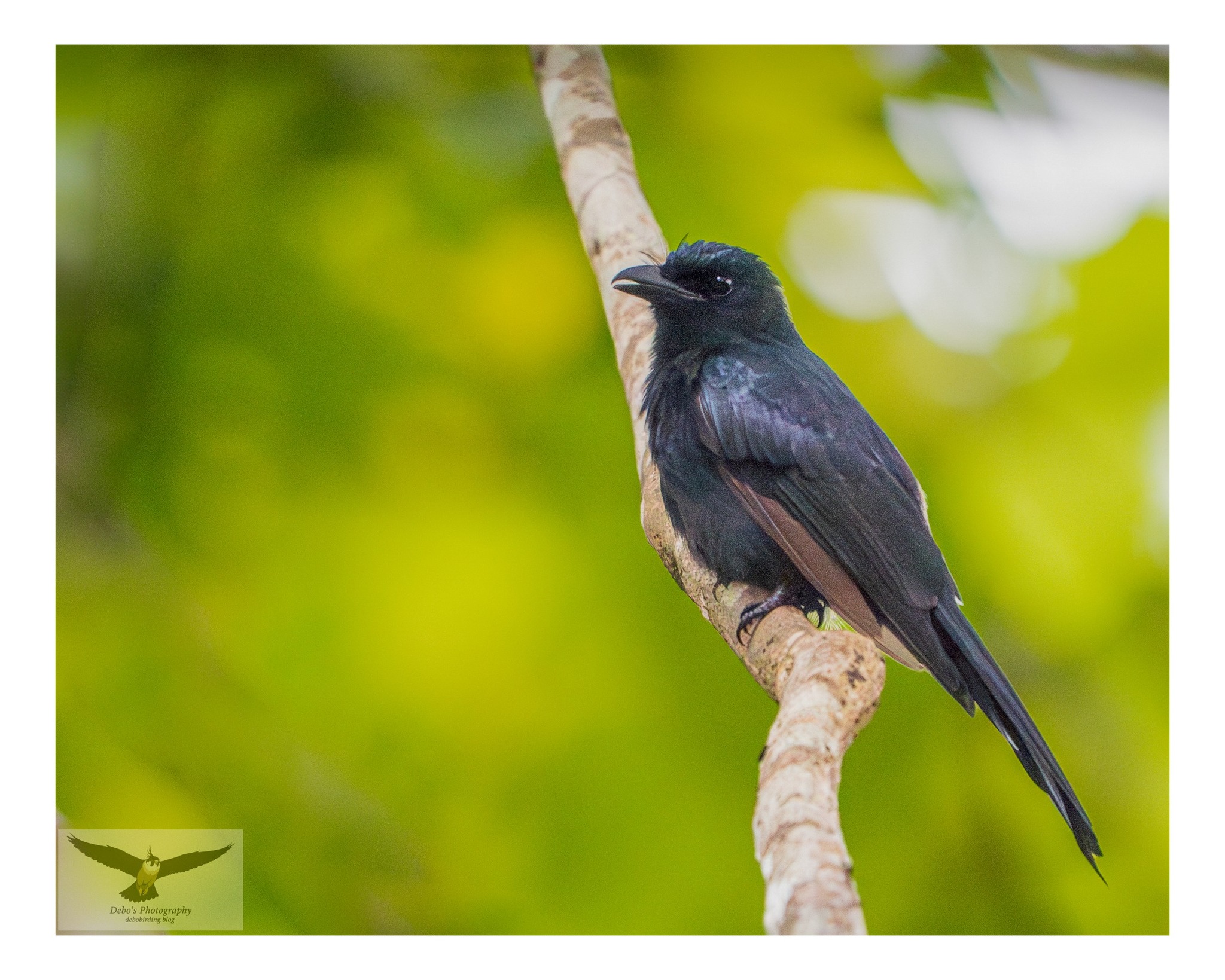
Andaman Drongo (Dicrurus andamanensis) - The Island Endemic
Naturally, I saw the Andaman Drongo while visiting the Andaman Islands in September 2025. This bird is strictly endemic to the archipelago.
It bears a strong resemblance to the Black Drongo but has a much deeper, heavier bill and a slightly less forked tail, which I found fascinating. It is amazing to see how a long period of geographical isolation on these islands allowed evolution to carve out such a unique species. Behaviorally, it shares the aggressive, aerial-acrobatic hunting traits of its mainland counterpart.
Comments