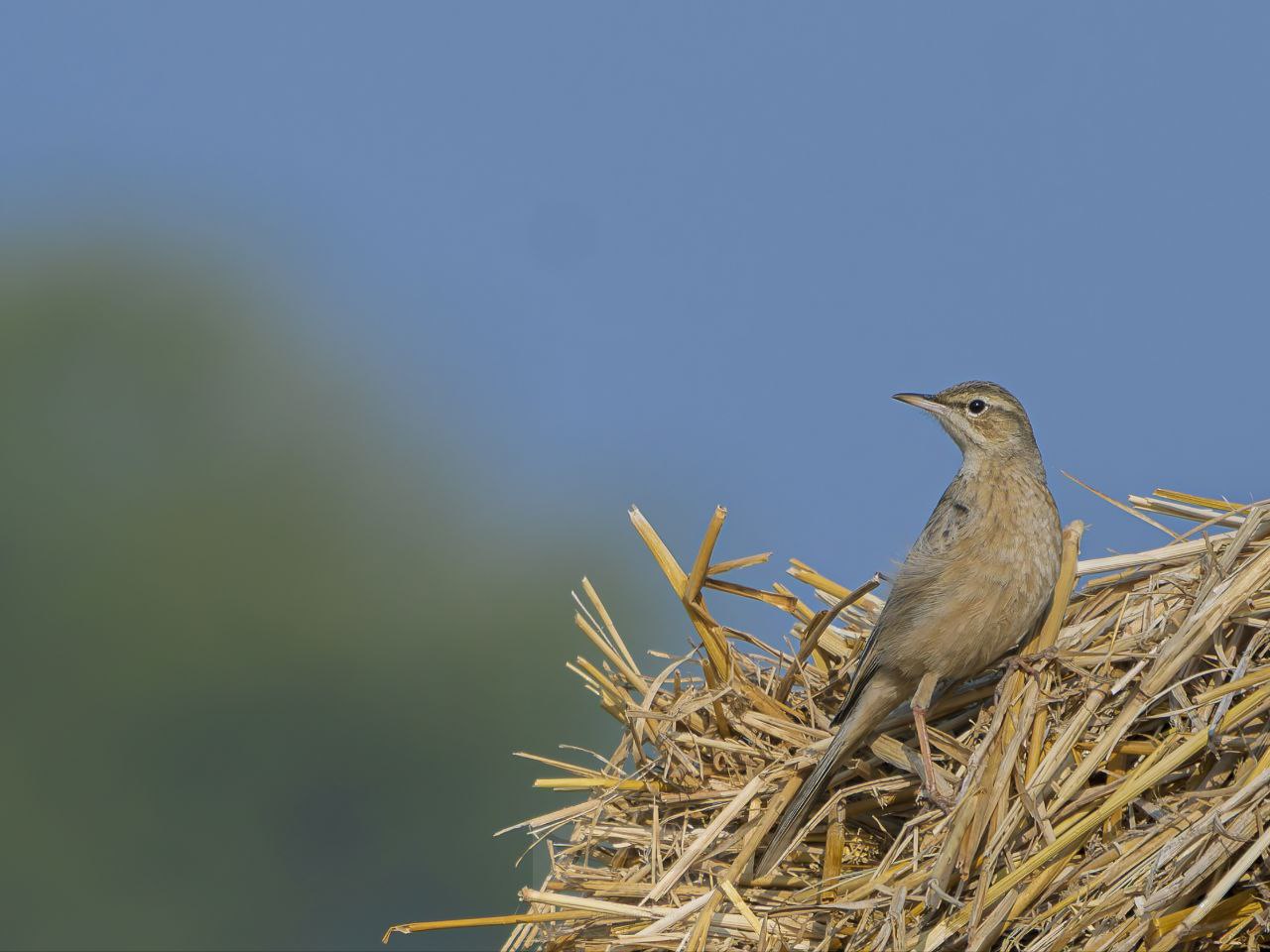
On the second day of our Nalsarovar bird photography trip, the morning began with a successful session capturing crakes in the soft light. As we moved across the landscape in search of the majestic Sarus Cranes, we were fortunate enough to find a pair and photograph them beautifully. However, the highlight of the morning turned out to be a smaller, more subtle subject hidden within the harvested paddy fields.
While scanning the area, something unusual caught my eye—a large, chunky bird that had landed on the dumps of harvested paddy.
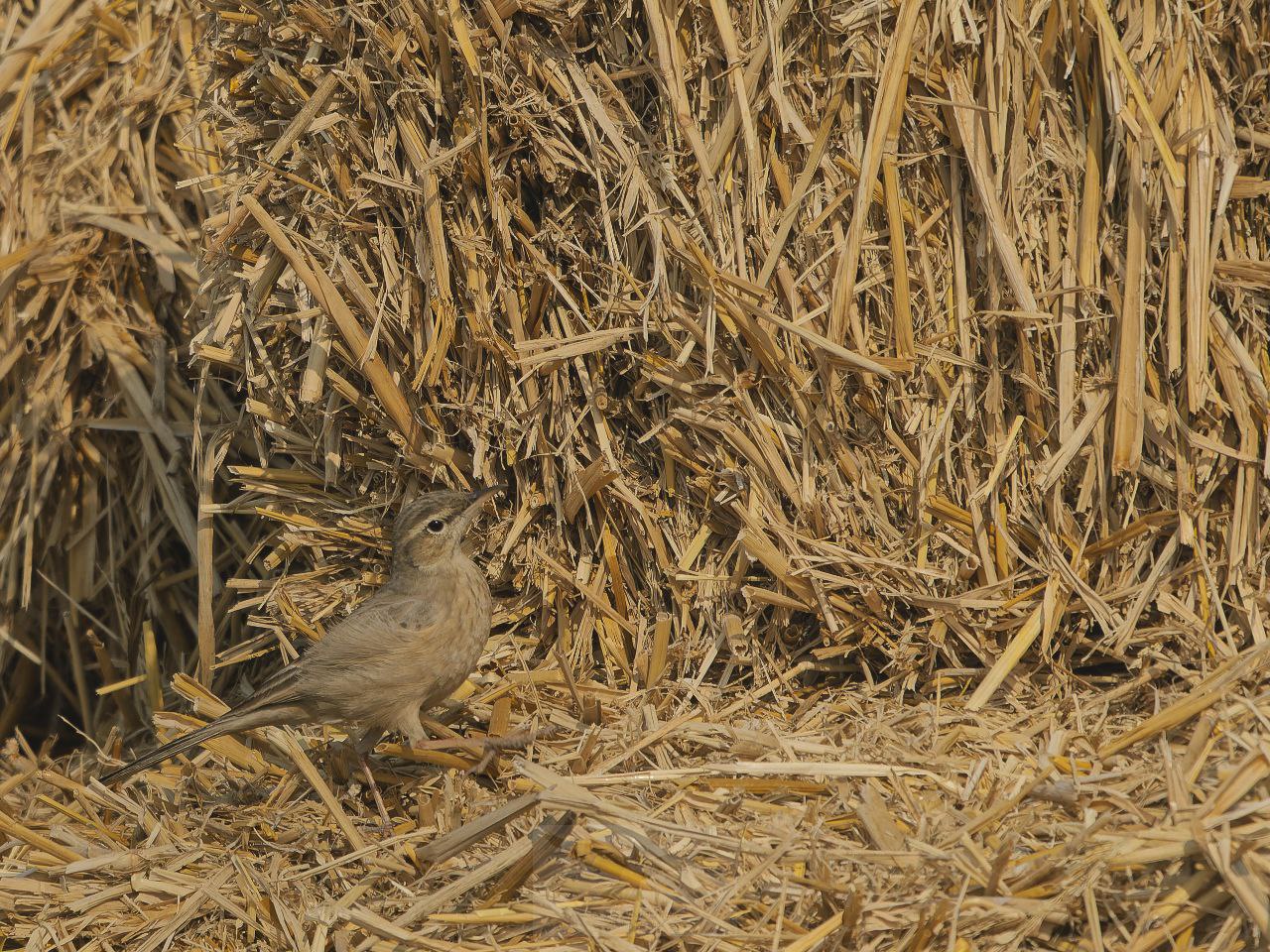
At first glance, the bird’s size was striking. The notably long bill immediately suggested a Long-billed Pipit (Anthus similis). However, I had to take a moment to look closer; the prominent rufous tones and the comparatively clean, less-streaked underparts were quite distinct. After verification, it became clear that this individual belonged to the subspecies Anthus similis decaptus.
This particular subspecies is known to winter in north-western India, including Gujarat. It typically displays warmer rufous coloration and reduced ventral streaking compared to other subspecies, which perfectly matched the individual we were observing. Below a photo from ebird matching the plumage that we captured.
Contextualizing this sighting makes it even more special. In West Bengal, Long-billed Pipits are considered rare winter migrants, with sightings largely restricted to areas like Purulia. While India hosts resident subspecies in the southern regions and the Deccan plateau, seeing this uncommon winter visitor in Gujarat was an exciting and unexpected highlight of our trip.
It is these moments—finding the unexpected while searching for the iconic—that make birding in Nalsarovar an endless adventure.
Comments