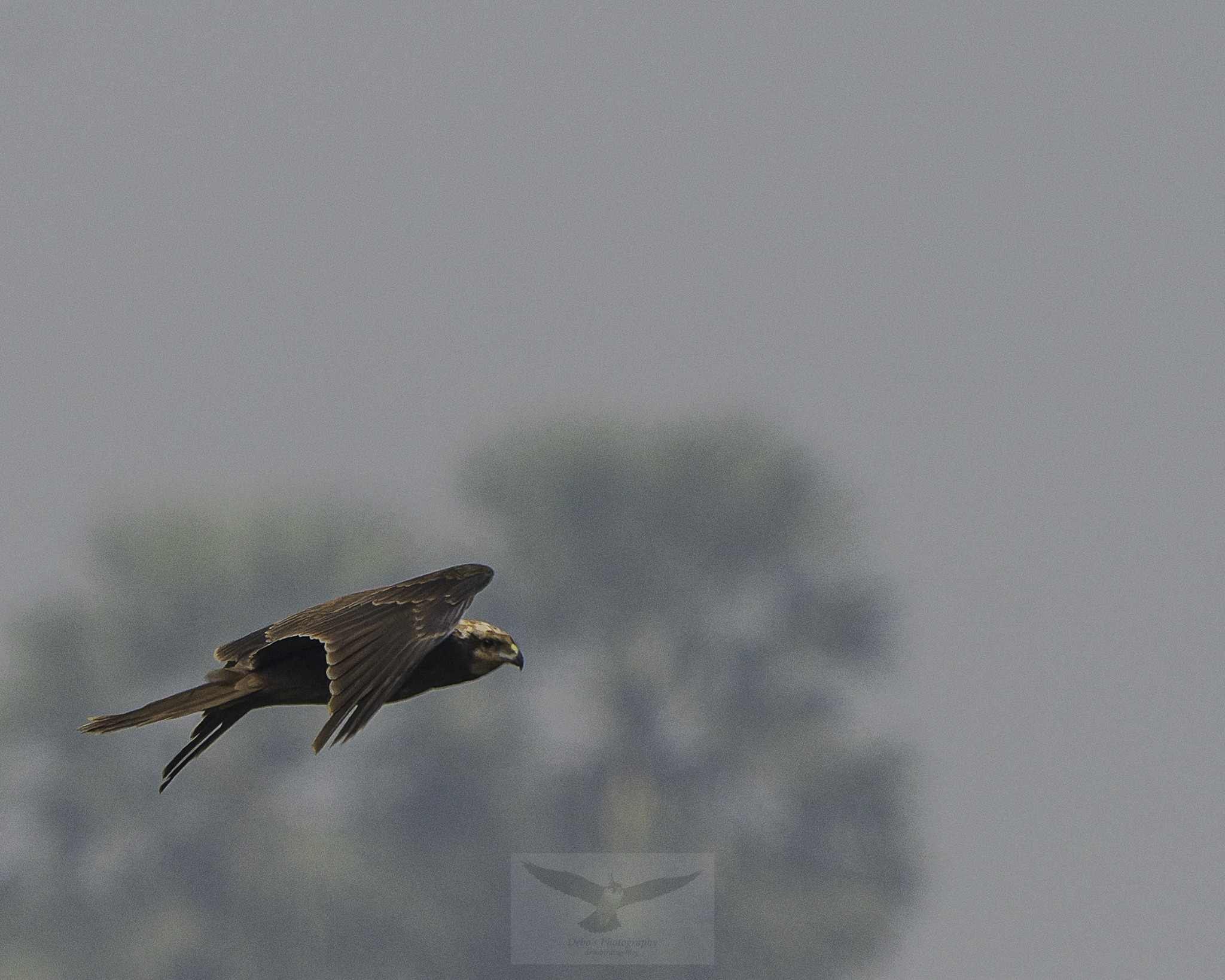
The Western Marsh Harrier is one of the most elegant birds of prey to visit India during the winter months, and for me, finally photographing it felt like the perfect way to end the year.
When I first started bird photography, harriers were a mystery to me. I initially learned about them through the Merlin Bird ID app, where my introduction was the Pied Harrier, a species relatively common in my area. As I explored further, I discovered the Western Marsh Harrier (Circus aeruginosus)—a large, powerful raptor associated with wetlands and grasslands. From that moment, I was determined to photograph one.
However, fate had other plans. Every time I encountered a brown harrier, it turned out to be the Eastern Marsh Harrier (Circus spilonotus), which was once considered a subspecies of the Western Marsh Harrier before being elevated to full species status. For nearly three years, my “Western Marsh Harrier” sightings always ended the same way—close, but not quite.
A Long-Awaited Sighting
That changed on December 17.
I visited a nearby wetland, hoping for a calm day of bird photography. The area was alive with activity: wagtails and pipits were busily foraging, and Asian Openbills moved steadily through the shallows. Suddenly, the entire wetland erupted into motion. Birds took off in alarm, and in the chaos, I spotted a harrier. A closer look revealed it to be a female Pied Harrier, being aggressively chased by three Black Kites. After that brief drama, I returned my attention to photographing wagtails.
Later, I decided to walk toward the far end of the wetland. There, I noticed a lone Black Kite perched in the distance—at first glance, it even resembled an eagle. Then something unexpected happened. A slim, brown raptor appeared, flying low and steadily over the grassland. Its flight style immediately felt different—far too buoyant and deliberate for a Black Kite.
The bird was distant, and I wasn’t fully confident at first. But once I managed a few photographs, the realization hit me: this was it. A female Western Marsh Harrier, the harrier that had eluded me for years.
The Encounter
The Western Marsh Harrier is a winter migrant to India, favoring wetlands, reed beds, marshes, and open grasslands. Females and juveniles are predominantly brown, with a creamy crown and throat, making them especially tricky to distinguish from Eastern Marsh Harriers. Unlike kites, they hunt by flying low over vegetation, gliding slowly and listening for prey such as rodents, small birds, frogs, and reptiles.
This individual continued flying over the grassland for nearly 15 minutes, giving me several close passes and precious photo opportunities. Watching it quarter the habitat so effortlessly was deeply satisfying—years of anticipation finally rewarded.
For me, the Western Marsh Harrier may be considered a common winter visitor, but this experience reminded me that even common birds can be hard to get. Timing, light, distance, correct identification, and sheer luck all need to align. Sometimes a species seen regularly by many can still remain a personal challenge, and that makes finally seeing and photographing it even more rewarding. This lifer proved that in birding, common never means easy.
With a full memory card and a very happy heart, I concluded my bird photography for the day and headed home. Ending the year with such a hard-earned lifer reminded me why birding is so addictive—patience, persistence, and a bit of luck can turn an ordinary day into an unforgettable one.
Comments